सामाजिक आर्थिक एवं जाति जनगणना 2026
I've spent time digging into the upcoming Socio-Economic and Caste Census. If you're wondering how it affects your family, what data is collected, and when officers will visit your home, you're in the right place.
Check the Socio Economic and Caste Census lists by searching below:
April 2026 - September 2026
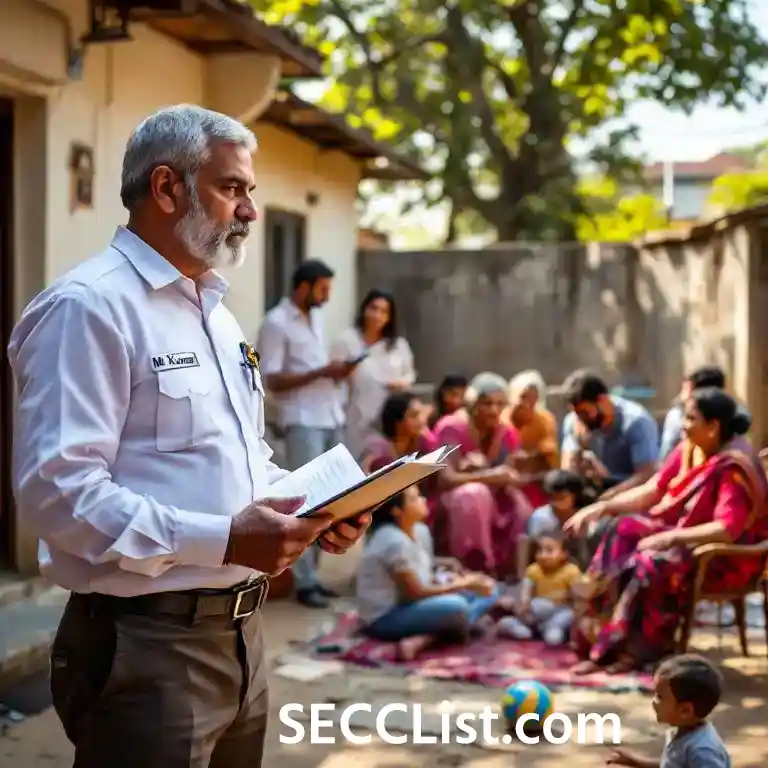
During this preliminary phase, trained enumerators will conduct a nationwide mapping of households to record family structures and physical assets. Note: No specific caste data is collected during this phase; the focus is on creating a robust base for the enumeration.
February 2027
The core phase for Caste Enumeration, where specific Jati and sub-caste names are recorded. This data is vital for assessing the OBC population count and tailoring reservation policies for marginalized communities.
The 2026-27 survey is more than a headcount; it is a socio-economic mapping exercise. By participating in the official survey conducted by visiting officers, citizens contribute to a database that will influence:
The 2011 Socio-Economic and Caste Census was a milestone in digital data collection, surveying 24.49 crore households. The findings revealed stark realities of rural India:
Approximately 56.25% of rural households do not own agricultural land, highlighting a deep-seated reliance on manual labor.
In rural areas, 75% of households earn less than ₹5,000 per month, with only 8% earning above ₹10,000.
Less than 10% of the rural population has completed higher secondary education, and only 3.41% have a graduate family member.
Over 90% of rural households lack salaried jobs, with 51% depending entirely on manual casual labor for survival.
The Digital Census 2027 represents a paradigm shift in how India counts its 1.4 billion citizens. By moving away from paper-based surveys, the 2026-27 exercise utilizes the latest in cloud computing and data security.
Leveraging high-security Tier-4 data centers to process the world's largest demographic dataset in record time.
The Socio Economic and Caste Census (SECC) 2026 is a comprehensive survey conducted by the Government of India to gather information about the socio-economic status and caste demographics of households across rural and urban India.
This census aims to create an authentic database that will help in better targeting of welfare schemes and understanding the caste composition of Indian society.
This portal provides a comprehensive independent analysis of the Socio-Economic and Caste Census (SECC) in India. Our mission is to bridge the information gap by providing historical context from the 1931 census to the present, detailed socio-economic insights from SECC 2011, and expert guidance on the upcoming 2027 digital registration process. We aim to empower citizens with accurate data and analysis to foster a more informed understanding of India's complex social and economic demographics.
The journey of caste enumeration in India spans over a century, transitioning from colonial administrative tools to modern instruments of social justice. Understanding this history is crucial to grasping the significance of the 2027 Digital Census.
The last comprehensive caste census was conducted in 1931 under J.H. Hutton. It documented 4,147 distinct castes and sub-castes, estimating the Other Backward Classes (OBC) population at 52%. This data served as the bedrock for the Mandal Commission's recommendations decades later.
After independence, the government led by Pt. Jawaharlal Nehru decided to discontinue caste enumeration (except for SCs/STs) to foster national integration. While well-intentioned, this created a 70-year data gap that complicated the implementation of reservation policies for OBCs.
Established to identify socially and educationally backward classes, the Mandal Commission relied heavily on the 50-year-old 1931 data. Its recommendation of 27% reservation for OBCs in 1990 fundamentally reshaped Indian politics and social structure.
The Socio Economic and Caste Census 2026 aims to create a comprehensive database of the socio-economic status and caste composition of Indian households. This data will be used for targeted implementation of welfare schemes and to understand the caste dynamics in Indian society.
All households in both rural and urban areas of India should participate in SECC 2026. The census covers all castes, religions, and economic sections of society.
You will need proof of identity (Aadhaar card, voter ID, etc.), proof of address, and caste certificate (if available). However, even without documents, you can register and the authorities will verify the information.
You can check the SECC list through this portal by searching with your details, or visit your local government office. The list is also displayed at Gram Panchayats in rural areas and municipal offices in urban areas.
Yes, all personal information collected during SECC is protected under confidentiality clauses. Individual data will not be made public, only aggregated statistics will be published.